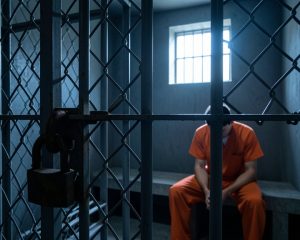
Why Justice Delayed in Criminal Matters Is Justice Denied
The principle that justice delayed in criminal matters is often justice denied is not merely a poetic phrase. It is a foundational truth recognized by legal systems around the world. When criminal proceedings drag on for months or years, the consequences ripple through every aspect of a case. Witnesses forget details. Evidence degrades or disappears. Defendants live under a cloud of uncertainty that can destroy reputations, finances, and mental health. Victims, too, suffer prolonged trauma as they wait for resolution. This article explores why timeliness is essential in criminal justice, what causes delays, and how reforms can restore balance to a system that too often moves at a glacial pace.
The Meaning Behind the Maxim
The phrase “justice delayed is justice denied” has deep roots in legal philosophy. It reflects the idea that a right to a fair trial includes a right to a speedy trial. If the state takes too long to bring a case to resolution, the very purpose of justice is undermined. In criminal matters, the stakes are uniquely high. A defendant may be held in pretrial detention for months or years before a verdict is reached. During that time, they may lose their job, their housing, and their family connections. Even if they are ultimately acquitted, the damage is already done.
For victims, delay means living in a state of limbo. They cannot move forward emotionally or psychologically until the case is concluded. In cases involving violent crime, the wait can be excruciating. The risk of witness intimidation or retaliation grows as time passes. And for society, delayed justice erodes trust in the legal system. When people see cases languishing in the courts, they lose confidence that the system can protect them or hold wrongdoers accountable.
How Delay Harms Defendants
Defendants face a unique set of harms when justice is delayed. The most obvious is extended pretrial detention. In many jurisdictions, a person accused of a crime can be held in jail for months or even years before their trial begins. This is not a neutral waiting period. It is a period of punishment before any finding of guilt. Studies show that even a few days in pretrial detention can increase the likelihood of a guilty plea, regardless of actual innocence. Defendants who are detained are also more likely to receive harsher sentences if convicted.
Beyond detention, delay affects the quality of the defense. Witness memories fade over time. Physical evidence can be lost or contaminated. Expert witnesses may become unavailable. The longer a case drags on, the harder it becomes for the defense to build a strong case. This is particularly true in cases that rely on alibi witnesses or surveillance footage that may be overwritten. The right to present a defense becomes hollow if the tools needed to do so are no longer available.
Financial strain is another major consequence. Even defendants who are released on bail face mounting legal fees, lost income, and the cost of complying with conditions like electronic monitoring. The stress of an unresolved criminal case can lead to mental health problems, including anxiety and depression. For many, the wait is a form of punishment in itself.
The Toll on Victims and Witnesses
Victims of crime are often forgotten in discussions of court delays. Yet they bear a heavy burden. A victim of assault, robbery, or domestic violence may need to relive the trauma repeatedly as the case is postponed. They may be required to testify months or years after the event, when memories are less vivid and the emotional wounds have not fully healed. The uncertainty of when or if the case will proceed can prevent them from achieving closure.
Witnesses also suffer from delay. A key witness may move away, become ill, or pass away before the trial occurs. In some cases, witnesses are intimidated or pressured to change their testimony. The longer the gap between the crime and the trial, the more opportunities there are for witness tampering. In gang-related or organized crime cases, this risk is especially high. A delayed trial can effectively become a trial without reliable witnesses, which undermines the pursuit of truth.
Systemic Causes of Delay
Delay in criminal matters does not happen by accident. It results from a combination of structural problems that plague many court systems. One major cause is underfunding. Courts, prosecutors, and public defender offices often operate with insufficient resources. This leads to overcrowded dockets, overworked attorneys, and a backlog of cases that grows with each passing year.
Another cause is the complexity of modern criminal cases. Discovery in a white-collar crime case can involve millions of documents. Forensic evidence may require months of analysis. Multiple defendants can multiply the time needed for hearings and motions. While some complexity is unavoidable, the system often fails to manage it efficiently. Judges may grant continuances too freely. Prosecutors may delay disclosure of evidence. Defense attorneys may file motions designed to postpone the inevitable.
Legislative and policy choices also play a role. In some jurisdictions, mandatory minimum sentences and three-strikes laws have increased the number of cases that go to trial rather than pleading out. This clogs the system with trials that could have been resolved more quickly. In other cases, procedural rules that are meant to protect defendants’ rights can be exploited to create delay. The result is a system that moves slowly even when all parties are acting in good faith.
Consequences for the Justice System
When justice is delayed, the entire system suffers. Public trust erodes. People who see cases taking years to resolve may conclude that the courts are ineffective or corrupt. This can lead to a decline in cooperation with law enforcement. Victims may be less willing to report crimes if they believe nothing will happen. Witnesses may be less willing to testify. Jurors may resent being called to serve on cases that have been pending for years.
Delay also increases costs. Each additional court appearance, each motion hearing, and each day of pretrial detention costs money. These costs are borne by taxpayers. In some jurisdictions, the cost of pretrial detention alone exceeds the cost of housing convicted prisoners. Money spent on prolonged detention is money that cannot be spent on rehabilitation, victim services, or crime prevention.
Perhaps most importantly, delay undermines the deterrent effect of criminal law. Punishment that comes years after the crime is less likely to deter future wrongdoing. The connection between the act and the consequence becomes blurred. For the principle of justice to have meaning, it must be delivered in a timely manner.
Real-World Examples of Injustice from Delay
Consider the case of Kalief Browder, a teenager in New York who was held at Rikers Island for three years without trial, most of it in solitary confinement. His crime? Stealing a backpack. The case was eventually dismissed, but the damage was permanent. Browder suffered severe psychological trauma and died by suicide two years after his release. His story is a stark reminder of what happens when justice is delayed.
There are countless other examples. In India, some criminal cases have been pending for decades. In the United States, the average felony case takes more than a year to resolve. In some states, the backlog is so severe that cases are dismissed simply because the state cannot bring them to trial within a reasonable time. These dismissals are not victories for justice. They are failures of the system to function as it should.
Speedy Trial Rights and Their Limits
Many legal systems have recognized the importance of speedy trials. The Sixth Amendment to the U.S. Constitution guarantees the right to a speedy trial. Similar protections exist in other countries. However, the enforcement of this right is often weak. Courts use a balancing test that weighs the length of the delay, the reason for the delay, the defendant’s assertion of the right, and the prejudice caused by the delay. In practice, this test is difficult for defendants to win.
Statutory speedy trial laws, such as the federal Speedy Trial Act, set specific time limits for bringing a case to trial. But these laws are full of exceptions. Delays caused by pretrial motions, competency evaluations, or the unavailability of witnesses are often excluded from the time calculation. As a result, cases can drag on for years without violating the statutory limits. The right to a speedy trial exists on paper, but it is not always enforced in practice.
Reforms to Reduce Delay
Several reforms have been proposed or implemented to reduce delay in criminal matters. Case management reforms are among the most effective. Courts that use differentiated case management track cases based on complexity and prioritize the most serious or time-sensitive cases. This allows resources to be allocated where they are needed most. Early court dates and strict limits on continuances can also reduce delay.
Technology can play a role. Electronic filing, video conferencing for pretrial hearings, and digital evidence management systems can streamline court processes. Many courts have adopted these tools, particularly after the COVID-19 pandemic forced a shift to remote proceedings. However, technology is not a panacea. It must be implemented thoughtfully and with attention to issues of access and equity.
Bail reform is another important area. Reducing the use of cash bail can prevent unnecessary pretrial detention. When defendants are released on their own recognizance or under supervision, the pressure to resolve the case quickly is reduced for the system but increased for the defendant. However, reform must be balanced with public safety concerns. The goal is not to release dangerous individuals but to avoid detaining people solely because they are poor.
The Role of Plea Bargaining
Plea bargaining is a major driver of case resolution in many systems. In the United States, more than 90 percent of criminal cases are resolved through guilty pleas. This allows courts to process large numbers of cases quickly. However, plea bargaining can also create pressure on defendants to plead guilty even when they are innocent, particularly if they are detained and facing a long wait for trial.
Reforms to plea bargaining include requiring more judicial oversight of plea agreements, ensuring that defendants understand the consequences of a plea, and limiting the use of charge stacking to coerce pleas. Some jurisdictions have also experimented with deferred prosecution agreements, which allow cases to be dismissed if the defendant completes certain conditions. These approaches can reduce delay while still holding defendants accountable.
Restorative Justice and Alternative Processes
Restorative justice offers an alternative to traditional prosecution that can reduce delay. In restorative justice programs, victims and offenders meet to discuss the harm caused and agree on a way to repair it. These programs are typically faster than court proceedings and can lead to outcomes that are more satisfying for victims. They are most appropriate for low-level or first-time offenses, but they can also be used in more serious cases with the consent of the victim.
Alternative dispute resolution, including mediation and arbitration, can also be used in criminal matters in limited contexts. These processes are typically faster and less formal than court trials. However, they are not suitable for all cases. Violent crimes and cases involving significant power imbalances may not be appropriate for alternative processes. The key is to match the process to the case.
The Human Cost of Delay
Behind every delayed case is a human story. A mother waiting to see her son’s killer brought to justice. A father sitting in jail for months, innocent but unable to prove it. A witness afraid to come forward because the case has been postponed so many times. These stories are not abstract. They are the lived experience of millions of people around the world who are caught in a system that moves too slowly.
The mental health toll is immense. Anxiety, depression, and post-traumatic stress are common among defendants and victims who endure long waits. Relationships suffer. Employment is lost. Some people never recover, even after the case is resolved. The phrase “justice delayed is justice denied” captures this reality in a few words, but it cannot fully convey the depth of the suffering.
The principle that justice delayed in criminal matters is often justice denied is more than a legal maxim. It is a call to action. It demands that we examine our systems, identify the causes of delay, and implement reforms that bring cases to resolution in a timely manner. It reminds us that the purpose of the criminal justice system is not just to punish the guilty but to provide closure, accountability, and fairness for all.
Moving Forward
Reducing delay requires commitment at every level of the system. Legislatures must provide adequate funding. Courts must adopt efficient procedures. Prosecutors and defense attorneys must work cooperatively to move cases forward. And the public must demand accountability from the institutions that serve them. The goal is not to rush cases to judgment but to ensure that the time between accusation and resolution is reasonable.
Technology, case management, bail reform, and alternative processes all have roles to play. But none of these reforms will work without a cultural shift. All participants in the criminal justice system must recognize that delay is not a neutral phenomenon. It is a form of harm. When we allow cases to languish, we allow injustice to persist. The principle that justice delayed in criminal matters is often justice denied should guide every decision, from the first arrest to the final appeal.
In the end, the measure of a justice system is not just whether it reaches the right result but whether it does so in a timely manner. A verdict that comes too late is not a true verdict. It is a failure. By committing to speed and efficiency, we honor the rights of defendants, the needs of victims, and the trust of the public. That is the only path to a justice system that truly serves everyone.